Shinbaro: A Botanical Drug for my knee problems served with a side of nerve repair? Yes, please.
The Origin Story: ACL Tear and Financial Reality
I tore my ACL when I was 23 while working at an education nonprofit that paid $1,200 a month and offered no health insurance. It was an early and abrupt lesson in the financial realities of pursuing mission-driven work after college. Like many idealistic graduates hoping to “do good” and “make change,” I hadn’t yet confronted how fragile access to healthcare could be.
Without the means to afford surgery in the United States, I flew to South Korea—where my immediate family had moved during my college years—for treatment. I was incredibly grateful to have that option. The cost of the surgery, hospital stay, meals, and accommodations was a fraction of what it would have been in the U.S., sparing me from taking on an estimated $20,000–$50,000 in medical debt at a young age.
After surgery, however, I had to return home and go back to work. Without the time or financial resources for proper physical therapy, I navigated recovery largely on my own. Eventually, determined to walk normally again, I removed the brace and progressed on my own timeline. Looking back, not being able to fully invest in rehabilitation during that critical window likely contributed to the instability and discomfort I still feel in my knee today if I’m not diligent about maintaining it.
Although the surgery itself was successful, the muscles surrounding my knee had already begun to atrophy during the months between the injury, scheduling surgery abroad, and returning home to recover while working. Surgery is also inherently traumatic to the body—nerves and small vessels are inevitably disrupted. The incision areas around my knee remained partially numb for years before sensation gradually returned as the nerves regenerated. When nerve signaling is reduced, other muscles, joints, and ligaments compensate during everyday movement. Over time, that compensation can create strain in places that normally wouldn’t carry that load—something I’ve had to stay mindful of with my knee ever since. Over time, this experience sparked a broader curiosity about what I had to do for myself in terms of long-term recovery and joint care.
A Decade of Knee Recovery
Due to the lingering instability in my knee, I had no choice but to listen to what my body was telling me. During residency, I spent long hours standing in the hospital, and I could feel how weak my knee still was. Concurrently at that time, I started noticing more women turning to weight training to feel stronger. Buzzy exercise programs like CrossFit, HIIT, and Orange Theory were on the rise. I joined a HIIT/crossfit-style gym in Bay Ridge, putting myself through circuit training with weights and cardio. On a resident’s salary in NYC, the initial thought of spending money on classes weighed on me but I knew the pain of a larger problem later on would incur a greater physical and financial toll. I decided to eat my short-term pain, hopeful that my investment in these exercise classes would save me what was now becoming daily knee concerns.
Everything inside me felt resistant to this new task I had to add to my already long days. Dragging my fatigued body after hours of standing and patient care, was absolutely the last thing I wanted to do. But I always left feeling stronger and most importantly, my knee over the course of a few weeks, then months started to feel better. Progress was slow but I could feel the small changes in my body. Mentally, I had greater clarity to study and focus after workouts. That consistent positive feedback kept me coming back especially on days I wanted to skip. Nearly ten years later, weight training has become a regular part of my life—three to five times a week, even if it’s just for 20-30 minutes. I can run again, though not long distances. I’m in the best shape I’ve ever been in, in part because of my injury and in part because now I know movement is the only choice for my physical and mental health. My knee is still not 100%. Times I have gone on vacation and not worked out for 1-2 weeks, I can feel the consequences, so I make sure to find a gym nearby. Some may see this as a nuisance or a curse but for me, it’s my daily reminder that I only get one body in this lifetime. I want to take the best care of this vehicle so I can be present and have the energy to accomplish the tasks I have to complete for basic survival, and also have the willpower left to strive for that which brings me joy and a sense of fulfillment.
The Discovery of Shinbaro
When I went back to Korea in the winter of 2025, I decided to get an MRI to address lingering worries: Could the nail in my knee be loosening? Was there inflammatory scar tissue or early arthritis? The MRI confirmed that the ACL and nail were fine—but revealed something completely unexpected. I had retained a vestigial structure called a plica, a synovial fold that around half of people lose during fetal development. It had become inflamed, causing discomfort after particularly intense runs or heavier squats and lunges. Seeing the thickened white line on the imaging, I was struck by both disbelief and awe: a tiny, almost forgotten embryological remnant had decided to become a focus in my daily life, secondary to my old injury. I had never even heard of plica in cadaver labs or anatomy classes—yet here it was, demanding attention.
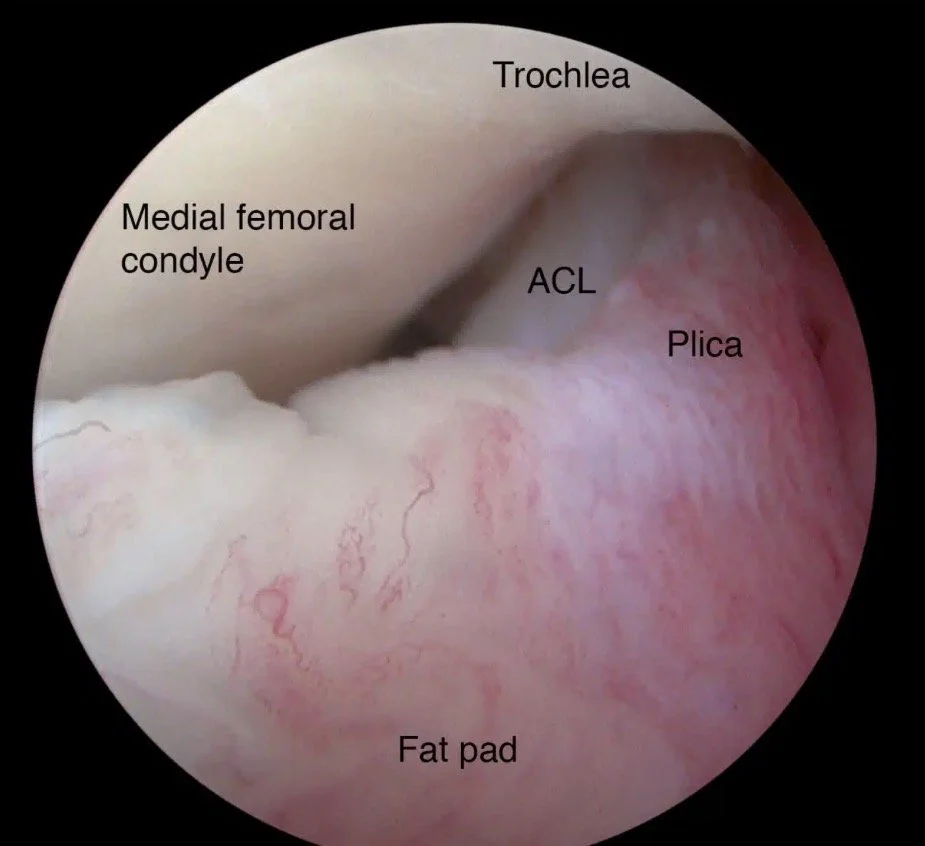
My orthopedic in Korea advised that, since I wasn’t a professional athlete, he didn’t recommend surgical removal of the plica. Instead, he suggested a regimen focused on prevention and minimizing inflammation. I also wasn’t eager for another surgery with all the downtime it would entail. He recommended limiting yoga, golf, and running—activities I practiced regularly. I told him honestly that wasn’t going to happen. He was annoyed with me, but continued on his recommendations, emphasizing minimizing inflammation through a clean diet, ice or heat for flare-ups, and a botanical drug called Shinbaro, a name I had never heard before.
He explained it worked like an NSAID with fewer side effects and was specifically studied for musculoskeletal injuries like mine. I was fascinated: a plant-based, naturally occurring medication with historical roots dating back to Heo Joon, a royal physician in the Joseon Dynasty (1500–1600s), now approved as a modern medicine. The idea that something natural, traditional, and researched could potentially help alleviate my symptoms was incredibly intriguing. Curious and motivated, I decided to explore Shinbaro for myself—to see how this historic, plant-based medicine might fit into my ongoing approach to knee care and long-term well-being.
Testing Shinbaro: My Personal Experiment
After much debate, I decided to take a leap of faith and try Shinbaro. I’m careful about what I put into my body— but my curiosity leaned me in, especially considering that I could not find any potential side effects for someone with my health profile (no medical conditions besides mild PCOS, and no daily medications). I planned to take a micro-dose approach, similar to how before we try a new topical or cream, we may do a patch test first to see if we get any irritation or adverse reaction before deciding to apply it to our face/body. My knee discomfort hasn’t yet escalated into pain, but on days when I want to go on a challenging hike, push through a tough workout, or take a dance class, I saw Shinbaro as a potential buffer against inflammation.
I first tried it after a 30‑minute run at 5–7 mph. I took one pill and couldn’t tell if it was placebo—but I felt better, which honestly surprised me. The recommended dosing is two 300 mg pills, twice daily; with micro‑dosing, you risk not feeling much at all. I’ve never really believed in quick fixes, and I initially lumped botanical drugs in with herbal supplements—assuming any benefit would take weeks. But botanical drugs are actually tested for safety and efficacy, unlike herbal products, and that distinction shifted my thinking. Now I’m experimenting with timing: taking it before a workout versus waiting until discomfort sets in. From my anesthesia training, prevention is almost always easier than trying to calm “angry” nerves once they’re triggered—and I’m also aware how much individual response can vary, shaped by metabolism, physiology, and even emotional state. In another trial, I took one pill a couple of hours before a run after my leg day had left me with some mild pain from increased weight-bearing exercises. That day, I spent 15 minutes on the elliptical and 30 minutes running— shockingly pain-free. For me, Shinbaro seems to work in these isolated, “microdosing” moments, providing relief when I need it most.
Recovery and Insights: Next Steps
I want to continue exploring how Shinbaro fits into my lifestyle, combining it with broader strategies:
Eastern Approach (Prevention / Longevity):
Weight lifting to what my body can bear without feeling pain to continue strengthening and supporting my muscles to support my joints
Joint mobility preservation exercises (yoga, stretches, sun-style tai chi are some examples) to strengthen connective tissues and keep synovial fluid moving/producing
Anti-inflammatory diet to minimize internal triggers of inflammation
Ice, heat, elevation for flare-ups
Western Approach (Acute / Monitoring):
Using Shinbaro for acute discomfort, not as a daily supplement
MRI every 5-10 years to monitor knee health (Imaging is not always necessary; this is for my own management/personal choice)
Considering steroids or the possibility of surgery further down the line if symptoms can’t be managed with my multimodal regimens
This approach allows me to balance prevention with proactive care, integrating both traditional and modern strategies to support my knee and overall well-being. Trying Shinbaro opened a door to a much bigger question: what is out there in the realm of botanical drugs and how can they be safely incorporated into an individual’s modern health routine? At a global level, different countries have variable regulation - what makes one country’s FDA standards different than another, that a drug like Shinbaro, would be approved for use in South Korea but that same formulation not in the US? Over the coming months, I plan to explore the difference between botanical drugs, herbal medicines, and supplements (as they all have different nuances), speak with experts, and test different approaches through an East-meets-West lens. I’ll share what I learn, what surprises me, and what may help support long-term wellness.
Facts/Research on Shinbaro
What’s in it?
6 purified plant extracts working synergistically to produce anti-inflammatory, analgesic, and joint protective effects.
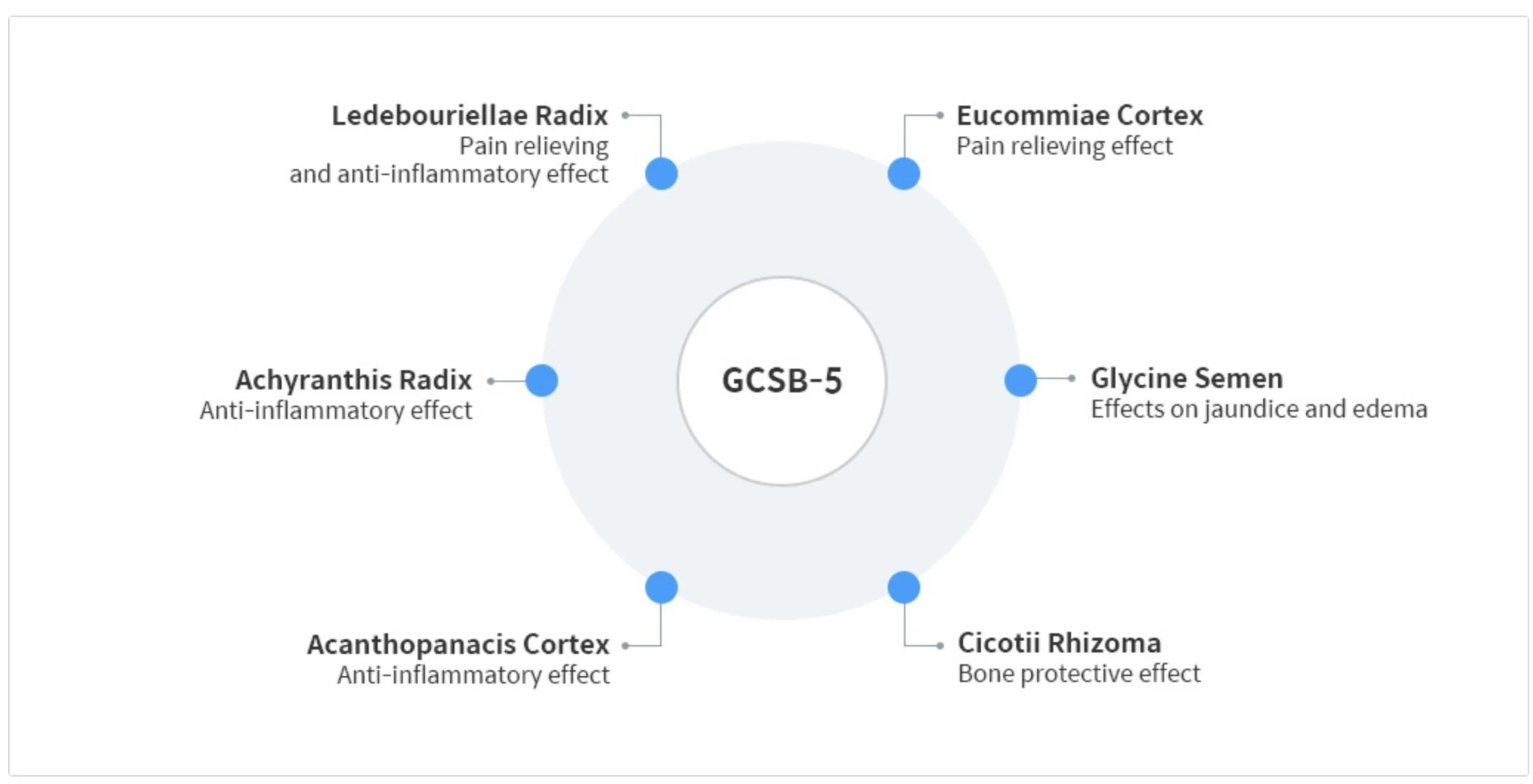
GCSB-5 = research name for “Shinbaro”
*Glycine semen is the Latin name for soya or soybean.
Citation: https://www.jaseng.net/activities/jaseng-medicine/shinbaro-herbal-medicine/?ckattempt=1
Caveats
Approved for use by the South Korean FDA in 2011; NOT currently FDA approved in the US
Research is ongoing regarding its efficacy and potential usage; findings are mixed and due to inability to reproduce data yielding the same results, articles you may see have been retracted not necessarily because of foul play but due to new information that may not support the original hypothesis
Eg. A widely cited article was recently retracted, not because of new findings regarding Shinbaro, but because of a copyright issue regarding the usage of data by a co-author. The retraction was requested by one of the co-authors of the article himself. https://retractionwatch.com/2012/10/08/herbal-arthritis-remedy-study-retracted-for-copyright-issues/
If you try this herbal medication, please research potential interactions or side effects with any medications or supplements you take.
This blog is not sponsored by and does not endorse the products discussed.
I’m an independent writer exploring global health and wellness options, sharing my findings and questions as part of my own health journey. What I write about is not medical advice/recommendations.
5 References FYI to kick off your own research
Lee SY, Kwon HK, Lee SM. SHINBARO, a new herbal medicine with multifunctional mechanism for joint disease: first therapeutic application for the treatment of osteoarthritis. Arch Pharm Res. 2011 Nov;34(11):1773-7. doi: 10.1007/s12272-011-1121-0. Retraction in: Arch Pharm Res. 2012 Mar;35(4):755. doi: 10.1007/s12272-012-0421-3. PMID: 22139679.
Article Link: https://order.springer.com/public/cart?message=AddToCartSuccess - this article was retracted and is available for purchase. I am going to try to obtain it through my institution.
Kim WK, Shin J-S, Lee J, Koh W, Ha I-H, Park HJ, Lee SK and Hong JY (2023) Effects of the administration of Shinbaro 2 in a rat lumbar disk herniation model. Front. Neurol. 14:1044724. doi: 10.3389/fneur.2023.1044724
Article Link: https://www.frontiersin.org/journals/neurology/articles/10.3389/fneur.2023.1044724/full
Chung, Hwa-Jin, Koh, Wonil, Kim, Won Kyung, Shin, Joon-Shik, Lee, Jinho, Lee, Sang Kook, Ha, In-Hyuk, [Retracted] The Anti-Inflammatory Effects of Shinbaro3 Is Mediated by Downregulation of the TLR4 Signalling Pathway in LPS-Stimulated RAW 264.7 Macrophages, Mediators of Inflammation, 2018, 4514329, 14 pages, 2018. https://doi.org/10.1155/2018/4514329
Article Link: https://onlinelibrary.wiley.com/doi/10.1155/2018/4514329
Jang JH, Song Y, Han SH, Choi BR, Lee YJ, Ha IH. Effects of Combined Shinbaro and Celecoxib in a Complete Freund's Adjuvant-Induced Inflammatory Pain Mouse Model. J Inflamm Res. 2025 Feb 17;18:2349-2362. doi: 10.2147/JIR.S500345. PMID: 39991659; PMCID: PMC11844300.
Article Link: https://pmc.ncbi.nlm.nih.gov/articles/PMC11844300/
Efficacy of Shinbaro in Hand Osteoarthritis— Clinical Trials Link: https://clinicaltrials.gov/study/NCT01910116?tab=results
Reported Benefits
Anti-Inflammation
Analgesia
Cartilage Protection
Lumbar disc herniation
Nerve regeneration - by preventing scar formation and reducing inflammatory cell signals, this can create a hospitable environment allowing nerve growth and restore motor function
Bone protection
For what conditions would I take this?
Osteoarthritis
Rheumatoid arthritis
Chronic back pain
Lumbar disc herniation
Musculoskeletal inflammation
Joint stiffness and reduced mobility
How does it actually work?
Reduces inflammation causing messengers such as cytokines (TNF-α, IL-1β)
Inhibits inflammatory pathways like COX-2 and NF-κB pathways
Protects cartilage
What are the side effects?
Common (mild)
GI upset such as nausea, dyspepsia, abdominal discomfort
Diarrhea
Allergic reactions (rash or itching)
Less common
Headache
Dizziness
Mild liver enzyme elevation (rare)
Herb-related hypersensitivity
Use caution if:
Pregnant or breastfeeding
Taking anticoagulants or anti-inflammatory drugs
Severe liver disease
Known herbal allergies
Recommended Dosage / Cost
Each tablet is 300 mg. It is recommended to take 2 tablets twice daily for 12 weeks (3 months). The tablets should be taken after meals to lessen chances of GI upset.
For a 1 month supply, the cost was $25.99 not including tax and shipping. As my plan is to consume only on an as need basis, I estimate I consume it about once a week - my supply should last me a year.
Eastern Health Approach – The Long Game (Experiential Perspective)
In my experience, well-being is supported by consistent daily practices rather than relying solely on a single supplement or routine. Some approaches I personally explore include:
Whole, minimally processed foods: Eating foods closer to their natural state (fresh, not packaged), moderating sugar and caffeine.
Gentle, mindful movement: Practices like tai chi, stretching, or diaphragmatic breathing to calm the body and re-set your nervous system especially in times of stress/anxiety
Listening to the body: Adjusting activity levels based on energy, recovery, and personal needs.
These practices reflect a long-term approach to supporting overall wellness, emphasizing balance and adaptability rather than quick fixes.
Western Health Approach – The Short Game (Observational Perspective)
For acute or persistent symptoms, I observe that seeking professional guidance can provide clarity and direction. Tools such as diagnostic testing, lab work, and medical consultations help identify underlying causes. Some individuals may experience symptoms like chronic pain or fatigue without a clear diagnosis (for example, fibromyalgia), which highlights the complexity of health and the need for individualized approaches.
Disclaimer The perspectives shared here reflect personal experiences and general observations. This content is not medical advice, and it is not intended to replace guidance from a licensed healthcare professional. Always consult qualified medical experts for diagnosis, treatment, or personalized health recommendations.